Every construction project begins in the ground, not in the structural design. Bearing capacity, compressibility, groundwater level and the soil’s response to earthquakes determine which foundation is viable and which structural system will be safe. That is why a proper geotechnical study is not a formality: it is the technical and financial foundation of any project in Panama.
This content is part of our construction magazine for the Americas, within the editorial line dedicated to civil engineering and geotechnics.
We spoke with Keli Correa, PhD geologist, consultant and university professor with more than two decades of experience in geology applied to infrastructure. Drawing on fieldwork and academia, she explains why understanding how the ground behaves is the real foundation of any safe and sustainable project.
You can also read the version published in the March 2026 issue of Construcción en Panamá magazine (in Spanish).
Why do we say every project starts in the ground?
“No project really begins with structural design; it begins with the ground.”
Soil or rock conditions everything that happens in the structure, because it is the medium that receives and transmits all loads. According to Correa, structural design cannot be approached in isolation: it depends directly on prior knowledge of the ground and its geotechnical behavior.
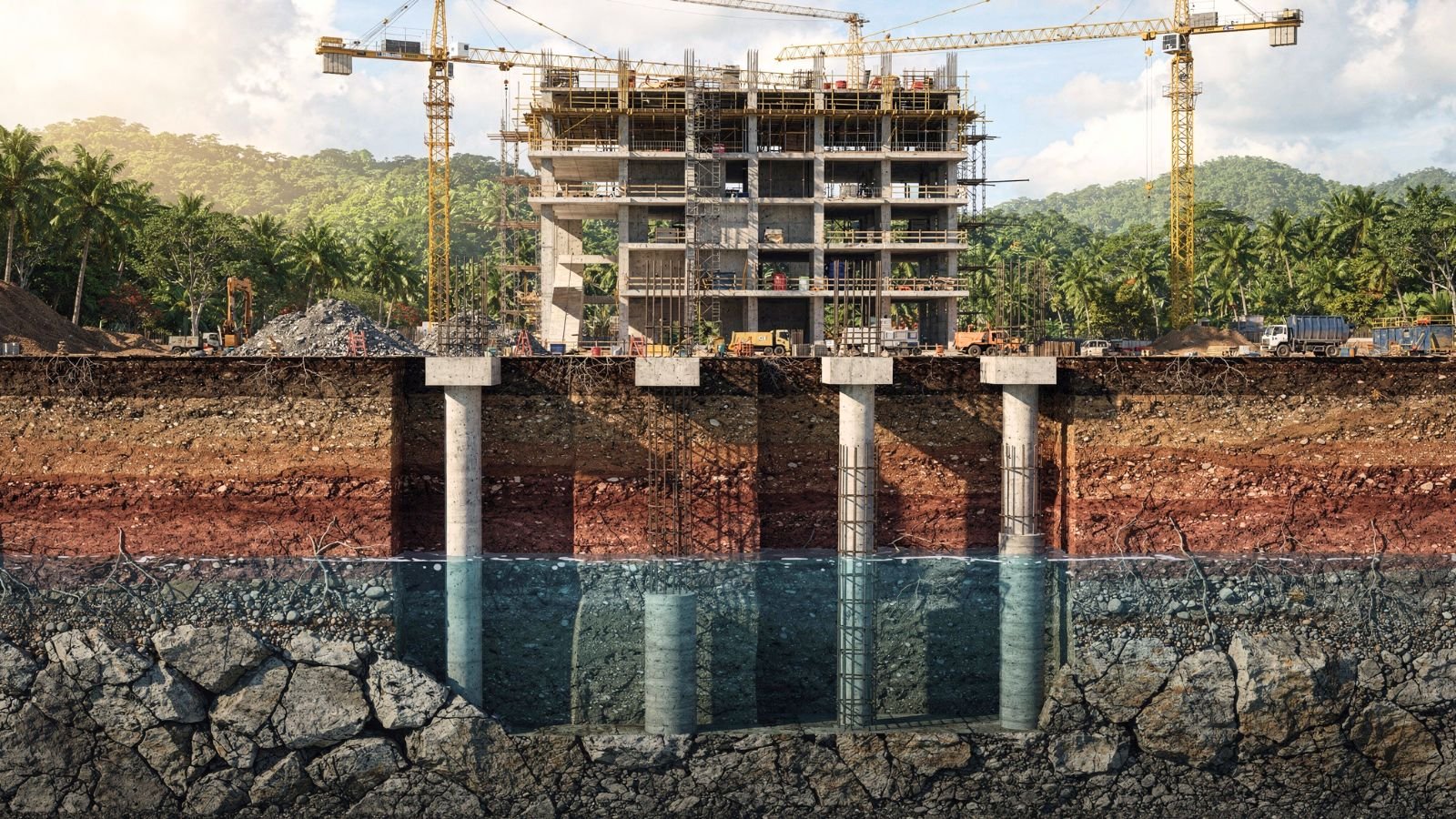
Factors such as bearing capacity, compressibility, groundwater level and response to seismic loads define the foundation and the structural system. Without that knowledge, any calculation is incomplete, however precise it may be in theory. “When the soil is not understood, the structure inevitably suffers,” she says.
What signs show that the soil study was insufficient?
When the study was insufficient or poorly interpreted, the site starts to “speak.” The most common signs are:
- Unexpected settlement during construction.
- Early cracks in slabs or walls.
- Unforeseen water in excavations.
- Differences between the projected geotechnical profile and what appears in the field.
When a project starts requiring constant corrective decisions, the root cause is usually an insufficient characterization of the ground, not the structural design.
“In most cases, early pathologies on site are not concrete failures, but failures of insufficient knowledge of the ground.”
Which areas of Panama pose the greatest geotechnical challenges?
Panama is geologically diverse and each region poses different challenges. Correa highlights four situations:
- Panamá Oeste: residual soils derived from highly weathered volcanic rocks predominate, with great variability in strength.
- Coastal areas: soft, generally saturated marine sediments with low bearing capacity and liquefaction potential during earthquakes.
- Urban areas on fill: a challenge when those fills were not technically controlled.
- Tropical climate: it accelerates weathering, so materials that look like competent rock at the surface actually behave like soils.
This variability adds to the country’s seismic context. To learn more, see our guides on fault lines in Panama and seismic risk management in Panama.
How much does skipping a proper geotechnical study cost?
“A geotechnical study is not an expense; it is an investment that reduces uncertainty and allows more efficient design.”
According to Correa, the cost of skipping it is usually the highest possible, in two ways:
- Overdesign: when the ground is not well understood, designs become overly conservative, resulting in oversized foundations and more concrete, steel or piles than needed.
- Surprises on site: if the actual behavior of the ground does not match the assumptions, redesigns, delays, reinforcement and even contractual disputes follow.
A career in geology applied to construction
Correa describes her career in construction and mining as a transformative experience in a demanding field that combines fieldwork, technical decisions and multidisciplinary teams. She was often the only woman in the field or in technical meetings, and over time she understood that “professional competence has no gender.”
Her message to women interested in engineering, geology or construction is direct: “Take up space. Prepare yourselves. Trust your judgment. Engineering and geology need talent, and talent has no gender.”
Frequently asked questions about geotechnical studies
What does a geotechnical study define?
It characterizes the ground: bearing capacity, compressibility, groundwater level and response to seismic loads. That information is used to decide the type of foundation and the structural system.
Why do early cracks appear in a new building?
They can have several causes, but Correa notes that many early pathologies stem from insufficient knowledge of the ground rather than concrete failures.
What is liquefaction?
It is the loss of strength that soft, saturated soils can suffer during an earthquake. In Panama, it is a risk to consider in marine sediments in coastal areas.
Building on knowledge
Before the concrete comes the soil. Investing in rigorous geotechnical characterization makes it possible to design efficient foundations, avoid cost overruns and reduce the risk of redesigns and disputes during construction. In a country with Panama’s geological diversity and seismic activity, knowing the ground is the first engineering decision.