The Panama Sanitation Program (Programa Saneamiento de Panamá) was created to solve a concrete crisis: for decades, the capital’s wastewater was discharged untreated into rivers and Panama Bay. With an investment of approximately 1.78 billion dollars, 22 pumping stations and more than 3,000 liters per second of treated water, it now directly benefits more than 1.5 million residents of the metropolitan area.
This content is part of the ConstructHUBS digital issues, within our editorial line dedicated to sustainability applied to the construction industry.
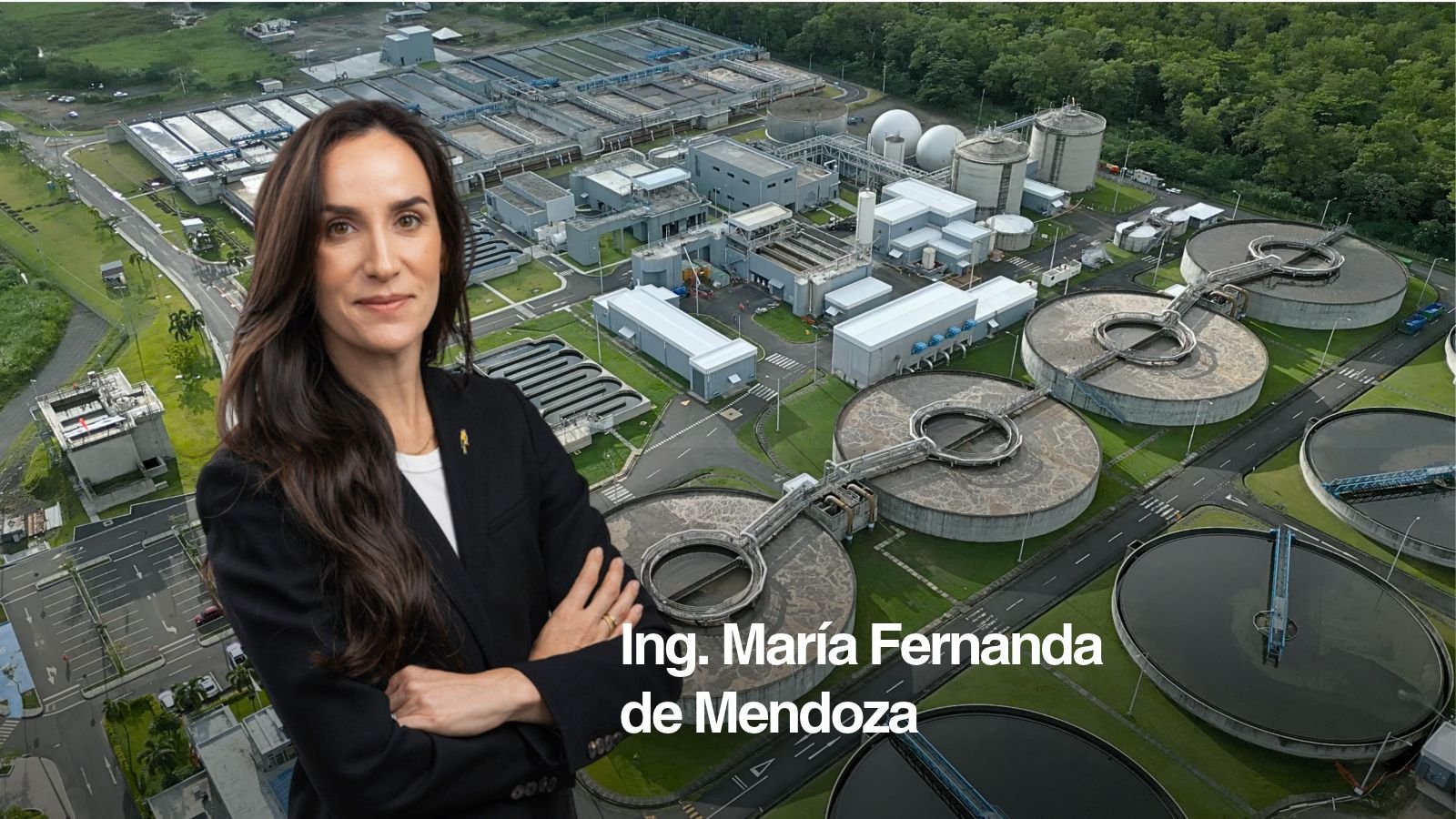
To understand the scale of the challenge we spoke with Eng. María Fernanda de Mendoza, a civil and environmental engineer with an Executive MBA and extensive experience managing strategic projects, who leads the program as General Coordinator. Her view: sanitation is the basic infrastructure on which the country’s real urban and social development is built.
You can also read the version published in the July 2026 issue of ConstructHUBS magazine (in Spanish).
Why was the Panama Sanitation Program created?
“The city had grown with its back turned to its waterways,” De Mendoza explains. Untreated discharges caused endemic odors, public health risks and severe urban degradation.
From the start, the goal has been to build the infrastructure to collect, convey and treat wastewater with reliable technology before returning it to the environment, in order to restore the ecosystem and improve Panamanians’ quality of life.
What have been the main milestones?
- Juan Díaz Wastewater Treatment Plant: the operational heart of the entire system.
- Interceptor tunnel and extensive sewer networks in dense, complex districts such as San Miguelito and the city center.
- Expansion into Panamá Oeste: Arraiján and La Chorrera grew explosively over the last decade, and providing them with sanitation was urgent to avoid repeating the problems of the capital’s center.
Key figures
- Approximate investment: 1.78 billion dollars over the life of the program.
- Hundreds of kilometers of networks and collectors built or rehabilitated.
- 22 high-capacity pumping stations.
- More than 3,000 liters per second of treated wastewater.
- More than 1.5 million residents directly benefited.
How far has the recovery of Panama Bay come?
Many changes are visible to citizens: fewer odors, spaces recovered for recreation and sports, and renewed use of areas such as the Cinta Costera.
The program acknowledges, however, that this perception must be backed by scientific evidence. The last comprehensive water quality measurement was carried out in 2021, and as De Mendoza explained in mid-2026, terms of reference were being prepared for a new study that will assess rivers, streams and water bodies and compare them with the baseline.
What challenges does sanitation face as the city grows?
The main challenge is the speed of urban growth and, often, the informality or lack of planning with which it happens. When settlements or residential areas appear without sanitation infrastructure, the pressure falls on existing systems, causing saturation and network failures.
Formal real estate development must also stay one step ahead: there must be collection, conveyance and treatment capacity before new large projects are occupied. “Urban planning and sanitation must go strictly hand in hand; they can no longer be isolated processes.”
What can citizens do to protect the sewer system?
“The most advanced infrastructure in the world does not work without civic culture.” Sanitary sewers are designed only for wastewater from toilets, showers and sinks. The greatest damage is caused by:
- Wet wipes, diapers and plastics.
- Above all, used cooking oil, which solidifies in the pipes and forms grease plugs that collapse the system and cause overflows.
The action is simple: do not use the toilet or the sink as a trash can.
What are the program’s goals?
- Short and medium term: complete the comprehensive projects in Panamá Oeste, including the new Arraiján Este Treatment Plant.
- Long term: close to 100% collection and treatment coverage in the metropolitan area, network monitoring with technology and data intelligence, and financial and operational sustainability of the system.
Frequently asked questions about sanitation in Panama
Where is Panama City’s wastewater treated?
The heart of the system is the Juan Díaz treatment plant, fed by the program’s interceptor tunnel and sewer networks.
How many people benefit?
More than 1.5 million residents of the metropolitan region, according to the program.
Why shouldn’t oil go down the sink?
Because it solidifies inside the pipes and forms grease plugs that block the network and cause street overflows.
Investing in sanitation is investing in development
For De Mendoza, Panama shows that sanitation is not an expense but the most profitable investment a state can make in public health and economic development. There can be no competitive city, tourism or sustainable urban development without first solving responsible water management. And building infrastructure must go hand in hand with building environmental awareness: a slow change, but the only way to hand down a resilient city with living waterways.
Stormwater management is the other side of the challenge; Eng. Arquímedes Fernández addresses it in his analysis of sustainable drainage and sponge cities in Panama.