Construction in Panama can no longer be understood without women’s leadership: developers, engineers, architects, geologists and specialists who run companies, megaprojects and professional associations. In our International Women’s Day special we spoke with eight of them, and earlier with the president of the Circle of Women Architects of Panama. Each offers a concrete lesson on how to plan, manage and build better.
This content is part of our construction magazine for the Americas, within the editorial line dedicated to the construction community.
You can also read the version published in the March 2026 issue of Construcción en Panamá magazine (in Spanish).
An industry in transformation
According to Jacqueline Bern de Mena, women’s participation has grown significantly, driven by universities graduating more and more women in STEAM fields. One milestone illustrates it: Irene Orillac de Simone is the first woman to chair the Panamanian Chamber of Construction (CAPAC). Even so, they all agree there is still a way to go at decision-making levels.
Jacqueline Bern de Mena: the project starts with strategy
CEO of Grupo Bern, she has taken part in the financial structuring and planning of major real estate developments. Her central idea: “a real estate project is not just a physical work; it is a strategic investment that must be planned from its conception.” Integrating the financial and design perspectives from the start leads to better decisions. Read the interview (in Spanish).
Yarisell González: logistics sets the pace of the job
An industrial mechanical engineer and CEO of SEQUIP, she started as an operations assistant at a ready-mix plant and went on to lead its delivery logistics. After spotting a lack of reliable, well-maintained equipment for placing concrete, she founded SEQUIP. She has been the only woman in the concrete pumping business in Panama and Central America. Her lesson: “in construction, logistics can make the difference between success and delay.” Read the interview (in Spanish).
Corina Briceño: megaprojects are won before construction
A civil engineer and CEO of Doppelmayr Panamá, with almost four decades on large projects in the Americas, Asia and the Middle East. She worked on the Panama Canal Expansion Program from the structuring stage, including an international prequalification and terms of reference that took about 18 months. Her takeaway: success is defined before construction starts, with solid cost, schedule and risk control systems. Doppelmayr is the company in charge of the Panama and San Miguelito cable car. Read the interview (in Spanish).
Tatiana Encalada: the budget as a management tool
A civil engineer with more than two decades in project management, construction administration and teaching. For her, the budget does not just say how much it costs to build: it schedules resources and cash flow and defines when capital contributions are needed. One of the most common mistakes she sees in Panama is not learning from the experience of other professionals in the industry. Read the interview (in Spanish).
Fany Kim Charris: interior design also builds value
An architect specializing in strategic interior design. She argues that interiors are not last-minute decoration but a tool that shapes perceived value, user experience and a project’s competitiveness. The most common mistake, she says, is bringing it in at the end. Read the interview (in Spanish).
Titi Hernández: landscaping is a structural part of design
A landscape designer and founder of Hiedra y Bambú Landscaping. She maintains that the garden is not the finishing touch: it regulates the microclimate, provides shade, improves air quality and creates meeting places. “Cities that prioritize their green spaces are more humane, healthier and more sustainable cities.” Read the interview (in Spanish).
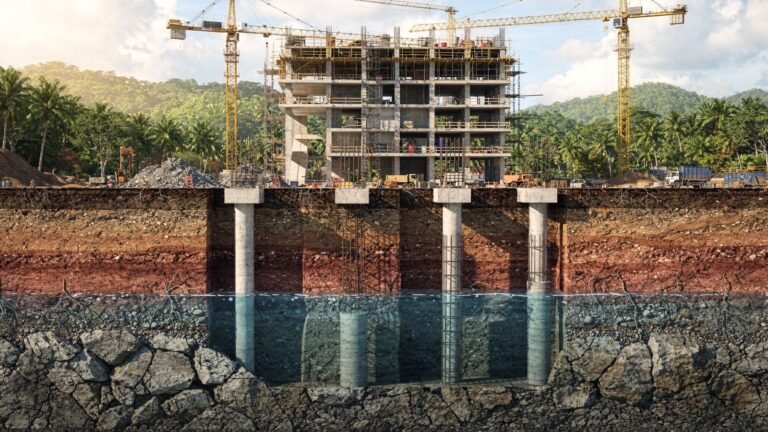
Keli Correa: before the concrete comes the soil
A PhD geologist and university professor with more than two decades in geology applied to infrastructure. She insists that no project begins with structural design, but with the ground. We develop her view in why the geotechnical study defines every project in Panama. Her message to other women: “Take up space. Prepare yourselves. Trust your judgment.”
Katherine Márquez: leading in the mining industry
A construction and project supervisor with more than a decade at Cobre Panamá. She began in camp and infrastructure maintenance during the mine’s construction phase, a constantly changing environment that shaped a problem-solving and continuous-improvement mindset. “Industrial operations are sustained by planning, resilience and teamwork.” Read the interview (in Spanish).
Yaneline Ureña: the evolution of women in architecture
As president of the Circle of Women Architects of Panama, architect Yaneline Ureña recalls what the founding members tell: decades ago there were four to six women per architecture class and a huge pay gap. Today most graduates are women, and women architects are teachers, business owners, representatives of international brands, restoration experts and public officials. Read the interview (October 2025, in Spanish).
What they have in common
- Plan before you build: financial strategy, soil studies, budgeting and logistics decide the outcome before construction.
- Integrate disciplines from the start: interior design and landscaping are not finishing touches.
- Competence has no gender: respect is built on knowledge, preparation and technical consistency.
Frequently asked questions
Who is the first woman to chair the Panamanian Chamber of Construction?
Irene Orillac de Simone.
What is the Circle of Women Architects of Panama?
The association that brings together Panamanian women architects and organizes exhibitions, talks, competitions and the International Architecture Forum.