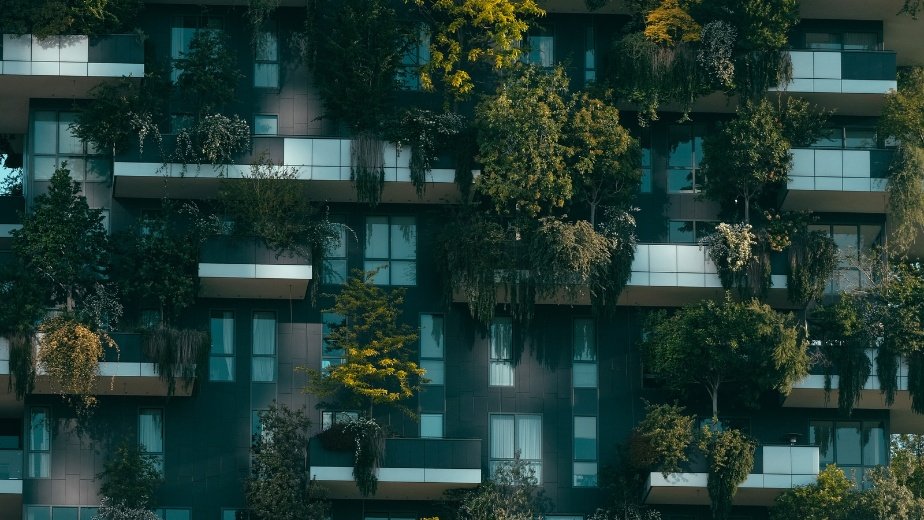
In contemporary architecture, talking about the “skin of the building” means much more than facades, finishes, or exterior appearance. The building envelope defines how a building responds to the climate, how it protects its occupants, and how it relates to its surroundings.
In tropical countries like Panama, where sun, humidity, rain, and solar radiation are part of everyday conditions, the building skin plays a fundamental role in thermal comfort, energy efficiency, and urban quality of life.
This article is part of the content published in the ConstructHUBS Digital Magazine, within our editorial line on sustainability in construction.
To explore this topic in depth, we spoke with architect Melissa Martínez, a bioclimatic design specialist and owner of BE GREEN PANAMA, who shares a technical, human, and thoughtful perspective on the importance of designing buildings that are more aware of their surroundings.
You can also read the original article in the June 2026 digital issue (in Spanish).
What is the building skin?
The building skin can be understood as the envelope that both separates and connects the interior and the exterior. Like the skin of the human body, this layer protects, adapts, and regulates the relationship with external conditions.
In architecture, that skin is made up of facades, roofs, windows, enclosures, materials, sun shading, seals, joints, and all the elements that influence the building’s thermal and environmental performance.
Its importance is not limited to one country or city. In any context, the indoor environment depends directly on how the envelope responds to its location. In tropical climates, however, this relationship becomes even more evident because of heat, humidity, and solar radiation.
How the envelope affects indoor thermal comfort
The building envelope plays a quiet but fundamental role. Although it is often not immediately noticed, it directly affects how people live, work, and experience each space.
A well-designed envelope can improve indoor thermal comfort, reduce energy use, and lessen excessive reliance on air conditioning. On the other hand, when design or execution fails, the building demands more energy, becomes less comfortable, and creates a poorer urban experience.
Every detail counts: from the type of glass to the sealing of the windows, from material selection to proper execution on site.
Common mistakes in facades, roofs, and enclosures in tropical climates
One of the most common mistakes is thinking that investing in efficiency is not worth it because whoever pays for construction will not always be the one who occupies or uses the building. This mindset can lead to decisions that seem to save money at first but end up raising operating costs, energy use, and complaints about discomfort.
Another common mistake is underestimating the impact of materials, especially on facades with high solar exposure. Choosing low-performance glass or enclosures can lead to hotter interiors, more air conditioning, and less comfort for occupants.
Execution is also key. An excellent material can be specified, but if the sealing, joints, or construction details fail, the result falls short of the expected performance.
Solar orientation, shade, and natural ventilation in efficient buildings
Solar orientation, shade, natural ventilation, and protection from radiation are essential decisions for creating buildings that are better adapted to the climate.
You cannot design the same way for every latitude. What works in a cold climate can be completely unsuitable in a tropical country. Each context calls for its own responses.
Indigenous architecture offers an important lesson: we do not necessarily have to copy its forms, but we should understand its strategies. Its relationship with climate, shade, ventilation, and materials can serve as a compass for creating buildings that are more sustainable and consistent with their surroundings.
Materials and solutions to improve thermal performance
There is no single solution for every project. Each site, orientation, use, and microclimate presents different conditions. That is why material selection should respond to a comprehensive strategy, not a one-size-fits-all recipe.
Local materials, solutions developed in other latitudes, or high-performance systems can all work, as long as they are applied correctly. What matters is understanding how each element contributes to the building’s thermal behavior.
The real challenge lies in combining art and science: designing a building that not only looks good but also performs well, adapts to the climate, and makes smart use of its materials, orientation, and massing.
Improving existing buildings without a full renovation
In existing projects, it is possible to improve the building skin without a full renovation. Everything depends on the assessment, the actual condition of the building, and the comfort and efficiency goals.
Some measures may include adjustments to seals, glass, sun shading, or insulation, or deeper interventions on facades and roofs.
Each building should be treated as a unique case. Before applying solutions, you need to understand its problems, possibilities, and available resources.
Energy savings, well-being, and the urban experience
A good envelope can contribute directly to energy savings because it improves the building’s thermal performance by its very nature. When a building is well designed, it needs less mechanical effort to provide comfort.
However, sustainability does not end inside the building. The skin also shapes the urban experience. A building can be energy efficient, but if it is poorly sited in the city or disconnected from its surroundings, it can create a poor urban experience.
Every building shapes the city, for better or for worse. That is why, beyond energy savings, connectivity, accessibility, welcoming design, and the way the building relates to people and public space must also be considered.
Sustainability as a long-term investment
Sustainability should not be seen as an added cost, but as a long-term investment. When a city and its residents thrive, opportunities to develop better projects also grow.
For developers, architects, builders, and owners, the challenge is to understand that sustainability can increase a project’s value, improve the user experience, and contribute to a more livable city.
It is not just about building more, but about building better.
Conclusion: designing buildings that are more aware of their surroundings
The building skin defines much more than its exterior image. It determines how the building performs thermally, how it protects its occupants, how much energy it uses, how it ages, and how it fits into the city.
In a context where energy efficiency, comfort, and sustainability are increasingly important for the construction industry, designing a good envelope is not a minor technical detail: it is a strategic decision.
At ConstructHUBS, we continue to promote content that connects architecture, engineering, infrastructure, and innovation to build a more conscious and sustainable vision of the built environment.