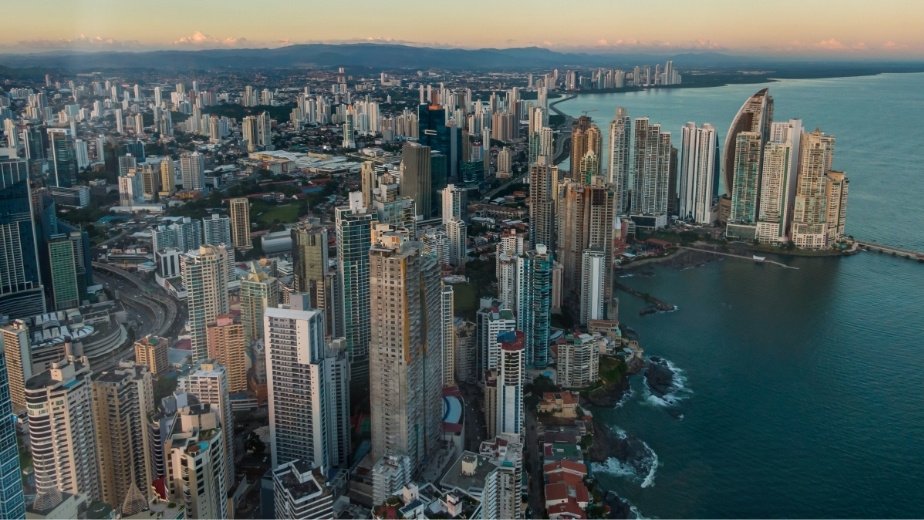
Urban growth, the spread of impervious surfaces, and the loss of green areas have changed the way cities absorb, retain, and release heat. In Panama, this phenomenon is especially relevant because of the tropical climate, high humidity, intense solar radiation, and the concentration of urban activity in densely built areas.
The urban heat island effect occurs when built-up areas record higher temperatures than the surrounding rural or less developed areas. This difference is felt not only in daily heat perception, but also in energy use, public health, environmental quality, and cities’ ability to adapt to climate change.
This article is part of the ConstructHUBS digital construction magazine, within our editorial line on sustainability, cities, and infrastructure.
To explore this topic in depth, we spoke with Arquímedes Fernández, a civil engineer, who shares a technical perspective on the relationship between urban infrastructure, materials, vegetation, drainage, planning, and climate resilience.
You can also read the article in the June 2026 issue of ConstructHUBS (in Spanish).
What is the urban heat island effect?
The urban heat island effect occurs when a city accumulates more heat than its natural surroundings. This happens because the materials that dominate urban areas, such as concrete, asphalt, metal roofs, and dark surfaces, absorb large amounts of solar radiation during the day and release that heat slowly at night.
Unlike natural soils, vegetation, and bodies of water, many built surfaces have little capacity to cool their surroundings. In addition, the lack of shade, poor urban ventilation, and the concentration of vehicles, mechanical equipment, and buildings increase the city’s heat load.
As a result, denser areas can feel hotter, less comfortable, and more energy-intensive.
Why this phenomenon matters for Panama
In Panama, the urban heat island effect is particularly relevant because it combines with a hot, humid climate for much of the year. When cities raise their surface temperatures and lose their natural ability to cool down, the impact is felt in people’s daily lives.
Unshaded streets, exposed sidewalks, large parking lots, roofs with high heat absorption, and areas with few trees can increase the sensation of heat and reduce the quality of public space.
This phenomenon also affects energy demand. The hotter the urban environment becomes, the greater the need for air conditioning in homes, offices, shops, and public facilities. This means more electricity use, higher operating costs, and more pressure on the power grid.
Urban materials that intensify heat
One of the most important factors in the formation of heat islands is the choice of urban materials. Asphalt, for example, absorbs a large amount of solar radiation and can reach very high surface temperatures. The same is true of certain roofs, facades, and dark pavements.
When these materials cover large areas, such as avenues, parking lots, hardscaped plazas, or industrial zones, the city loses its ability to regulate temperature.
The solution is not just to change materials, but to understand how each surface contributes to the thermal behavior of its surroundings. Color, reflectance, permeability, texture, shade, and ventilation are variables that must be considered from the planning and urban design stages.
The role of vegetation and green infrastructure
Vegetation is one of the most effective tools for mitigating the urban heat island effect. Trees provide shade, lower surface temperatures, improve pedestrian comfort, and help cool the air through natural processes.
Green infrastructure can include tree-lined corridors, urban parks, rain gardens, green roofs, living walls, permeable areas, and landscape solutions integrated into streets, buildings, and public spaces.
These strategies do more than reduce heat. They also bring benefits in stormwater management, biodiversity, air quality, urban well-being, and resilience to extreme weather events.
Urban planning, drainage, and climate resilience
The urban heat island effect should not be analyzed in isolation. It is linked to the way cities are planned, how land is used, and how infrastructure is designed.
A city with too many impervious surfaces not only retains more heat but also reduces the natural infiltration of rainwater. This can worsen runoff, overload drainage systems, and cause urban flooding.
That is why mitigation strategies must integrate urban planning, green infrastructure, sustainable drainage, tree planting, material selection, and public space design. Climate resilience requires a more complete view of the city.
Impact on health, mobility, and public space
Rising temperatures in urban areas directly affect people’s health and well-being. High temperatures can especially affect children, older adults, outdoor workers, and people with vulnerable health conditions.
They also affect urban mobility. When sidewalks have no shade, walking becomes uncomfortable and less safe. The same applies to transit stops, plazas, building entrances, and waiting areas exposed to the sun.
A hotter city can discourage the use of public space and increase dependence on vehicles and enclosed, air-conditioned spaces. That is why designing for shade, vegetation, and thermal comfort is also designing for inclusion, mobility, and urban quality.
What construction projects can do
Construction projects have an important responsibility in reducing the urban heat island effect. Every building, subdivision, plaza, parking lot, or urban intervention can either add to the problem or be part of the solution.
Key decisions include planting trees, reducing dark surfaces, using more reflective or permeable pavements, integrating vegetation, improving building orientation, designing facades with better thermal performance, and considering the project’s impact on its immediate surroundings.
Sustainability should be assessed beyond the property line. A project can be efficient inside, but if it generates excessive heat, removes shade, or cuts off public space, its contribution to the city will be limited.
Toward cooler, more livable cities
Mitigating the urban heat island effect requires a combination of technical, urban, and environmental decisions. It is not just about planting more trees or changing pavements, but about understanding how the city works as a system.
Planning must consider climate, density, vegetation, mobility, water, materials, and people’s well-being. Every urban decision has thermal, environmental, and social consequences.
In Panama, moving toward cooler cities means integrating sustainability and resilience from the design stage, strengthening green infrastructure, and promoting a construction culture that is more aware of its surroundings.
Conclusion: building resilience through urban design
The urban heat island effect is one of the great challenges of today’s cities. In Panama, its impact is directly related to the way urban growth is built, planned, and managed.
Reducing this phenomenon requires looking beyond the individual building and understanding the city as a combination of infrastructure, public spaces, materials, vegetation, and human dynamics.
At ConstructHUBS, we continue to promote content that advances a more technical, sustainable, and resilient view of the construction industry, connecting architecture, engineering, infrastructure, and innovation to build more livable cities.