Acid mine drainage (AMD) occurs when sulfide-bearing materials such as pyrite come into contact with water and oxygen and generate acidic effluents that mobilize metals. One of the most effective and economical ways to prevent it is to stop water from entering waste rock deposits by covering them with compacted soil of low hydraulic conductivity. But not just any soil will do: it must be selected through testing.
This content is part of the ConstructHUBS digital issues, within our editorial line dedicated to sustainability applied to the construction industry.
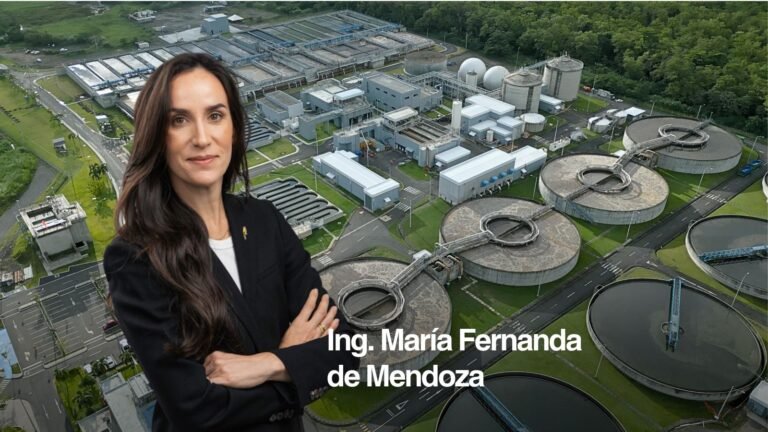
It is explained by Keli Correa, PhD, geologist and consultant, professor at the University of Panama and UTP, based on a study carried out at an open-pit coal mine in Butiá, southern Brazil.
You can also read the version published in the July 2026 issue of ConstructHUBS magazine (in Spanish).
What is acid mine drainage?
It forms when materials containing sulfides, such as pyrite and marcasite, react with oxygen and water. The problem is not just acidity: as pH falls, metals such as iron, zinc, copper, nickel, lead and cadmium become more soluble and move more easily, contaminating soils and water bodies.
Water as the starting point
In mining, water is a strategic resource but also a vehicle for contamination. That is why one of the most effective strategies is to prevent surface water from freely entering deposits of waste rock or mine residues (known in Brazil as bota-foras).
The practical alternative is to cover them with compacted soil that limits infiltration and reduces contact between reactive materials, oxygen and moisture. The goal: isolate the potentially contaminating material and prevent acidic leachate from forming.
Which soil works as a barrier?
To work, the cover must have low hydraulic conductivity, that is, be practically impermeable. In Butiá, two soils from the mine itself, one red and one yellow, were evaluated through:
- Grain-size analysis.
- Consistency limits and soil classification.
- Compaction tests.
- Laboratory hydraulic conductivity measurements.
- Physico-chemical and mineralogical characterization.
A soil’s appearance does not always reflect how it behaves with water, which is why these tests are essential.
What the study revealed
| Yellow soil | Red soil | |
|---|---|---|
| Composition | More clay and plasticity; kaolinite and smectite | Lower plasticity and a higher sand fraction |
| Impermeability | Reached adequate values for a barrier | Did not reach the desirable minimums |
| Key caution | Cracks when it dries; needs protection | — |
Smectite swells when wet, reducing the soil’s voids and slowing the passage of water. But when it dries it shrinks and can crack, opening paths for water. The barrier must therefore be protected from direct sun and rain, for example with a final layer of another clay soil that keeps it moist.
Prevent rather than treat
The main lesson is that environmental prevention begins long before the problem appears. Properly designing waste rock deposits, selecting soils through testing and controlling compaction in the field can significantly reduce the generation of acidic water. It is a relatively simple and economical solution, but it requires technical judgment, quality control and maintenance throughout the life of the cover.
Construction, infrastructure and mining share the same challenge: working the land without compromising the water that sustains communities and ecosystems. Correa had already shown how engineering can turn mining environmental liabilities into useful infrastructure.
Frequently asked questions
Why is acid drainage dangerous?
Because as pH drops, metals such as iron, zinc, copper, nickel, lead and cadmium dissolve and move, potentially contaminating rivers and aquifers.
What is hydraulic conductivity?
The ease with which water passes through a soil. An effective barrier needs very low values.
Why do some clays crack?
Those containing smectite shrink when they lose moisture. If unprotected, the cracks let water in.