A Public-Private Partnership (PPP, or APP in Spanish) is a long-term contract in which the private sector designs, builds, finances, operates and maintains public infrastructure, while the State regulates, supervises and controls the service. In Panama, the model is governed by the principle of “value for money”: it is only used when it generates more benefit than traditional public delivery. The country’s first PPPs focus on roads, such as the Pan-American Highway East, the Pan-American Highway West and the Centenario Highway.
This content is part of the ConstructHUBS digital issues, within our editorial line dedicated to infrastructure.
To understand how the model works, we brought together three perspectives published in our special PPP issue: that of Ana Julia Carreira, National Secretary of PPPs, with a background in financial structuring and public credit; that of Esperanza Elena Miranda, a consulting lawyer specializing in structuring and managing PPP projects; and that of Grupo ADIPSA on the role of BIM across the life cycle of these contracts.
You can also read the version published in the April 2026 issue of Construcción en Panamá magazine (in Spanish).
How is a PPP project born in Panama?
PPP projects originate as public initiatives aligned with the Government Strategic Plan and, according to Carreira, must come from the five-year public investment plan. To move forward, the initiative must show that this modality is more efficient than traditional delivery. The evaluation covers:
- Social analysis and benefits for the population.
- Cost-benefit analysis.
- The proposed allocation of risks.
- Service indicators.
- Financial sustainability.
- Legal and environmental aspects.
In other words, a PPP does not start on site: it starts at the desk.
What does “value for money” mean?
It is the principle that ensures the project generates more benefit than if the State delivered it directly: cost optimization, better service quality, efficient risk transfer and measurable results for users. It changes the procurement logic: it is no longer just about building, but about delivering performance.
How are risks shared?
| Private sector | State |
|---|---|
| Design, construction, financing, operation and maintenance | Regulation, supervision and control of the service |
The idea is that each party takes on the risks it can manage best.
Which institutions are involved?
- Governing Body (Ente Rector): approves and defines projects. It is made up of the ministers of MEF, MOP, MINREX and MICI, with the Comptroller participating with a voice, and is chaired by the Minister of the Presidency.
- National PPP Secretariat (SNAPP): provides technical support and links the contracting entity with the MEF.
- Contracting Public Entity (EPC): develops the project, for example the MOP for roads.
- Ministry of Economy and Finance (MEF): assesses the fiscal impact.
- Comptroller General: audits.
- DGCP and the Administrative Public Procurement Tribunal: regulate the processes.
How are PPPs financed?
They can be self-financed, when revenue comes from users through tolls or fees, or co-financed, when they require State contributions.
According to Carreira, because construction and financing risk is transferred, the State generally has no payment obligations to the contractor until construction is complete and the service is available. This “oxygenates” the investment budget. For example, the Pan-American Highway East was awarded in 2024 and its payments become due in fiscal year 2027, when construction should be complete. In addition, there are caps so entities do not commit more than a certain share of their investment budget, and the MEF publishes an annual report on PPP payment obligations.
How is maintenance ensured for 20 or 30 years?
Through key performance indicators (KPIs) that vary by phase —pre-construction, construction, operation and maintenance— and are measured with the support of the project supervisor. For roads, one of them is the management and maintenance of drainage systems.
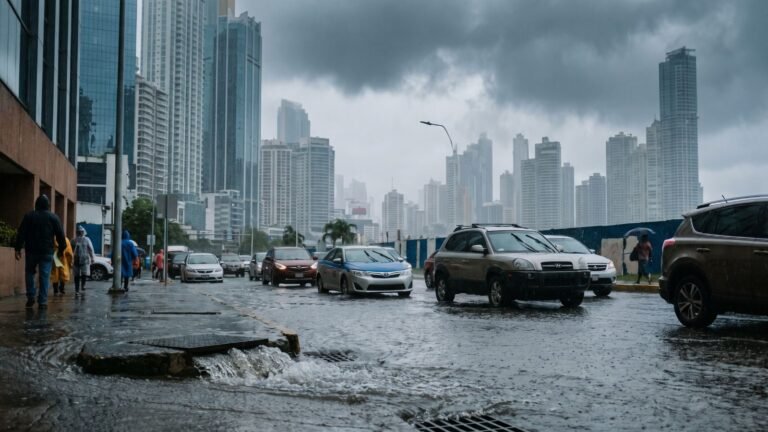
Climate risk is also part of the structuring. For the Pan-American Highway East, rainfall peaks were analyzed using CATHALAC modeling through 2050, and the contractor must submit a Risk Management Plan and an Emergency Response Plan.
What changes when a PPP moves into execution?
For Esperanza Elena Miranda, the project stops being a technical exercise and becomes a system that interacts with the territory, communities and institutional capacity. Lessons from the first road PPPs:
- Institutional preparation is as decisive as structuring.
- Easements, social management and permits must be coordinated from the start.
- Allocating risks is not enough: they must be monitored and acted on in time.
She identifies three critical aspects for avoiding delays or disputes: risk management, land and social management, and contract administration. “Successful execution depends more on the ability to anticipate than to react.”
What does BIM bring to a PPP?
Because PPPs do not end with construction, the digital model becomes an asset for the entire life cycle. According to Grupo ADIPSA, BIM:
- In structuring: makes it possible to visualize the project, identify early risks and estimate costs and schedules more reliably.
- In design: integrates architecture, structures and MEP, detects clashes and reduces contractual risk.
- In execution: compares planned against actual work and manages changes traceably.
- In operation: supports maintenance management, asset monitoring and planning of interventions.
What challenges does the model face in Panama?
Although the legal and technical framework is defined, success will depend on execution: agile tendering, transparency, State technical capacity, private sector interest and legal stability. Miranda insists that PPPs must become State policy.
As of April 2026, the SNAPP was exploring extending the model to social infrastructure, such as a maximum-security prison, agro-industrial plants and a recreation center in Santiago. Executive Decree 58 of June 26, 2025 allows social projects with prior studies, no land risk and successful precedents in other jurisdictions to go directly to tender. The SNAPP was also analyzing incorporating unsolicited private proposals into the legal framework. To follow the updated portfolio, visit the website of the National PPP Secretariat.
Frequently asked questions about PPPs in Panama
What is the SNAPP?
The National Secretariat of Public-Private Partnerships, which provides technical support to projects and acts as a link between the contracting entity and the MEF.
What is an availability payment?
A scheme in which the State pays the contractor when the infrastructure is available and meets service levels, rather than paying during construction.
What PPP projects exist in Panama?
The first are road projects: the rehabilitation and maintenance of the Pan-American Highway East, the Pan-American Highway West and the Centenario Highway.
Building better, not just more
PPPs are a real opportunity to accelerate infrastructure in Panama, but they require more planning, coordination and execution than traditional models. Their success will not lie in the number of projects, but in their ability to generate real value for the country.
You can also read the full interviews with Ana Julia Carreira and Esperanza Elena Miranda in the digital issue (in Spanish).