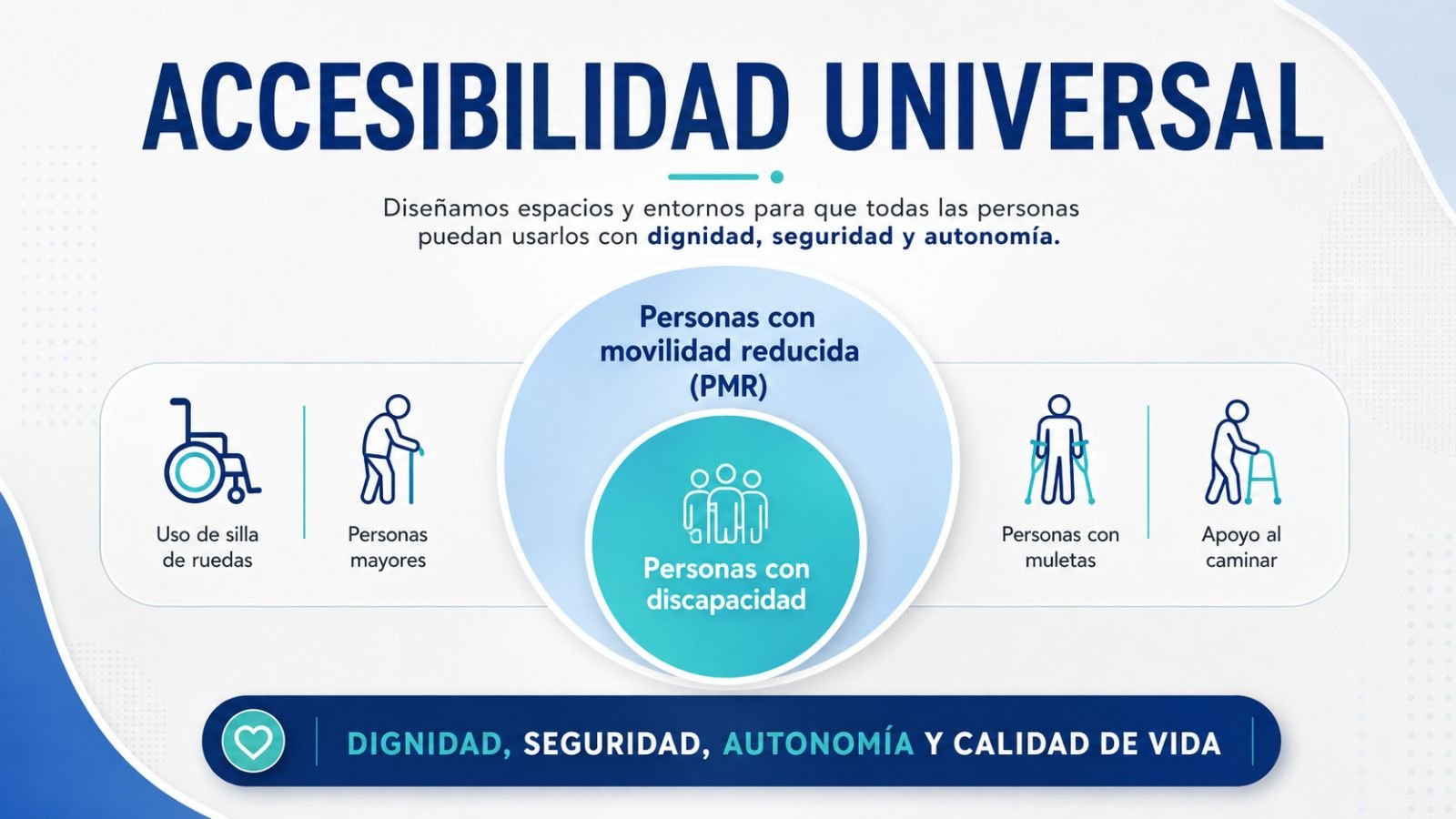
Universal accessibility is not about designing for a few, but about creating spaces that work better for everyone. A ramp or a clear path serves a wheelchair user, but also an older person, a pregnant woman or a traveler with luggage. In practice, it is organized around four functional criteria known as DALCO: ambulation, grasping, location and communication.
This article was originally published in our construction digital magazine, within the editorial line dedicated to architecture and design.
The approach is that of Francesc Romeu, CEO of Triple A, a strategic consultancy in universal accessibility. His proposal: move from physical accessibility to universal quality of service, and from correcting barriers once built to anticipating them from the planning stage.
You can also read the version published in the August 2026 issue of ConstructHUBS magazine (in Spanish).
What is universal accessibility?
For Romeu, urban design requires a paradigm shift: accessibility should not be planned only as a measure for people with disabilities, but as a standard that raises the quality of life of all citizens.
When a step is removed, flow improves for 100% of users. European experiences, such as RENFE rail interchanges or the Madrid Metro, show that when short flights of stairs are replaced with moving ramps, practically all passengers choose the accessible route for convenience, which decongests the conventional routes.
“The best accessibility is the kind that allows people to move around independently, without feeling different.”
What are the DALCO criteria?
They are four functional criteria that should be built in from the initial design of a project (the acronym comes from the Spanish terms):
- Ambulation (Deambulación): moving through a space without obstacles or risks. It involves adequate dimensions for sidewalks, corridors and doors, and removing elements such as posts or bins from walking lines.
- Grasping (Aprehensión): being able to reach and operate physical elements. It defines the height of buttons, handrails, counters and opening systems so they work for both a short person and a wheelchair user.
- Location (Localización): visual, tactile or sound systems that let people know where they are and where to go.
- Communication (Comunicación): making the information in the environment understandable to everyone, with adequate color contrast, legible typography and multisensory alerts.
Construction mistakes that undermine accessibility
Cities in many countries face the same challenge: aesthetic, construction or maintenance decisions end up compromising function. Romeu highlights three:
- Poorly executed tactile paving: installing it is not enough. It must be continuous, contrasting and placed consistently with the route; used as decoration, it loses its usefulness for people with visual impairments.
- Obstructive street furniture: poorly placed posts, bins, planters or signs reduce the clear width and turn a seemingly accessible sidewalk into an obstacle course.
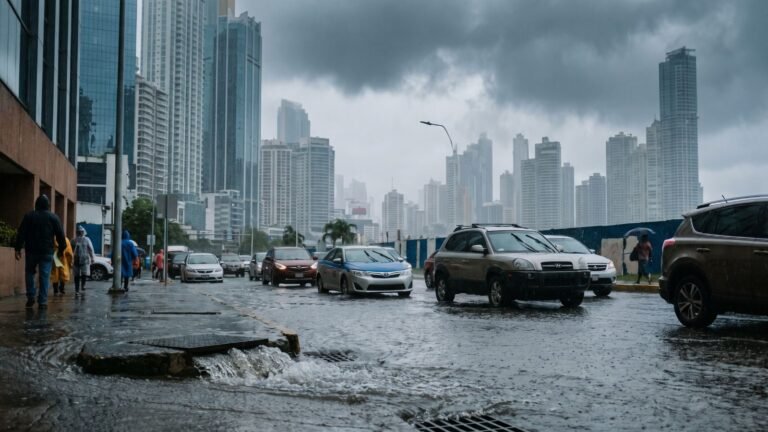
- High-risk intersections: misaligned curb ramps, abrupt level changes, slippery surfaces or poor drainage make crossing difficult for older people, wheelchair users and pedestrians in general.
The conclusion is clear: effective accessibility is not achieved with isolated elements, but with continuity along the entire route.
How do you plan an accessible city?
Building accessible cities requires coordination among public administrations, developers, architects, engineers, builders, transport operators and urban space managers. The criteria must be part of urban plans, projects and technical specifications, and be maintained during construction, operation and upkeep.
But infrastructure is not enough. Customer service, security, emergency and public service staff need training to interact with people with different physical, visual, hearing or cognitive needs. That is why Romeu speaks of moving from physical accessibility to universal quality of service.
Frequently asked questions about universal accessibility
What does DALCO stand for?
It is the Spanish acronym for the four accessibility criteria: Deambulación (ambulation), Aprehensión (grasping), Localización (location) and COmunicación (communication).
Does accessibility only benefit people with disabilities?
No. It also benefits older people, pregnant women, families with strollers, travelers with luggage and, in general, all users.
What is tactile paving for?
It guides people with visual impairments. It only works if it is continuous, contrasts with its surroundings and follows the route consistently.
Accessibility as a quality criterion
Triple A’s vision is to anticipate barriers from the planning stage and integrate universal accessibility as a project quality criterion. Designing for everyone is not an extra cost: it is how to build more comfortable, safer and more independent spaces for anyone.